


Zomline Survival
Yoozoo (Singapore) Pte. Ltd
I spent time with Zomline Survival as a strategy game built around a tense combination: placing defenses against zombies while also expanding a settlement and making longer-term decisions about survival. That mix gives it a different rhythm from a straightforward tower defense game. I am not only asking which unit should stop the next wave; I am also thinking about what to build, where to invest, and whether a short-term rescue is worth weakening my wider position.
That broader structure is the reason I found it more interesting than a quick, disposable defense game. It asks for attention in short bursts, but it also rewards habits that become clearer after several sessions. The game is free to start, carries an Everyone 10+ age rating, and comes from Yoozoo (Singapore) Pte. Ltd. Its average rating is 4.6 from around 12K ratings, with over 100K installs, so it has already attracted a sizable audience without feeling like a niche experiment.
My overall impression is positive, with an important qualification: this is best for players who enjoy planning under pressure rather than people looking for a purely relaxed idle experience. The zombie theme may draw you in, but the real appeal is the repeated decision-making between immediate defense and future growth.
How I settled into the survival routine
Starting with a repeatable baseline
My most reliable opening habit was to avoid treating every attack as an isolated emergency. I first looked at the available space and the likely route into the area, then considered how a defensive position could remain useful after the current threat passed. A placement that solves one wave but blocks future development can be more expensive than it appears.
This is where the 4X side changes the usual tower-defense mindset. In a conventional defense game, I might spend nearly everything on immediate firepower because the next objective is simply to survive. Here, I found it more useful to preserve some flexibility. Building growth, protection, and expansion as separate priorities prevents one successful defense from leaving the settlement unable to handle what follows.
Related News






I also learned to watch the pace of a session instead of reacting to every visual warning. When the field is under control, that is often the best moment to prepare the next phase rather than continue making small upgrades without a plan. The useful question is not just “Can I stop this attack?” but “What will my position look like after I stop it?”
That simple change made my runs more consistent. I began each session by identifying the most vulnerable approach, established a dependable defensive core, and only then looked for opportunities to improve the wider base. It sounds basic, but it prevents the common mistake of spreading resources across too many ideas before any one of them is dependable.
Using short sessions without losing the larger plan
A realistic use case is a commute or a short break when I have enough time for a few meaningful decisions but not an entire long-form strategy campaign. I can check the settlement, make a defensive adjustment, and leave with a clearer next objective. When I return, I am not forced to remember a complicated sequence; I can resume from the same priorities.
Gallery
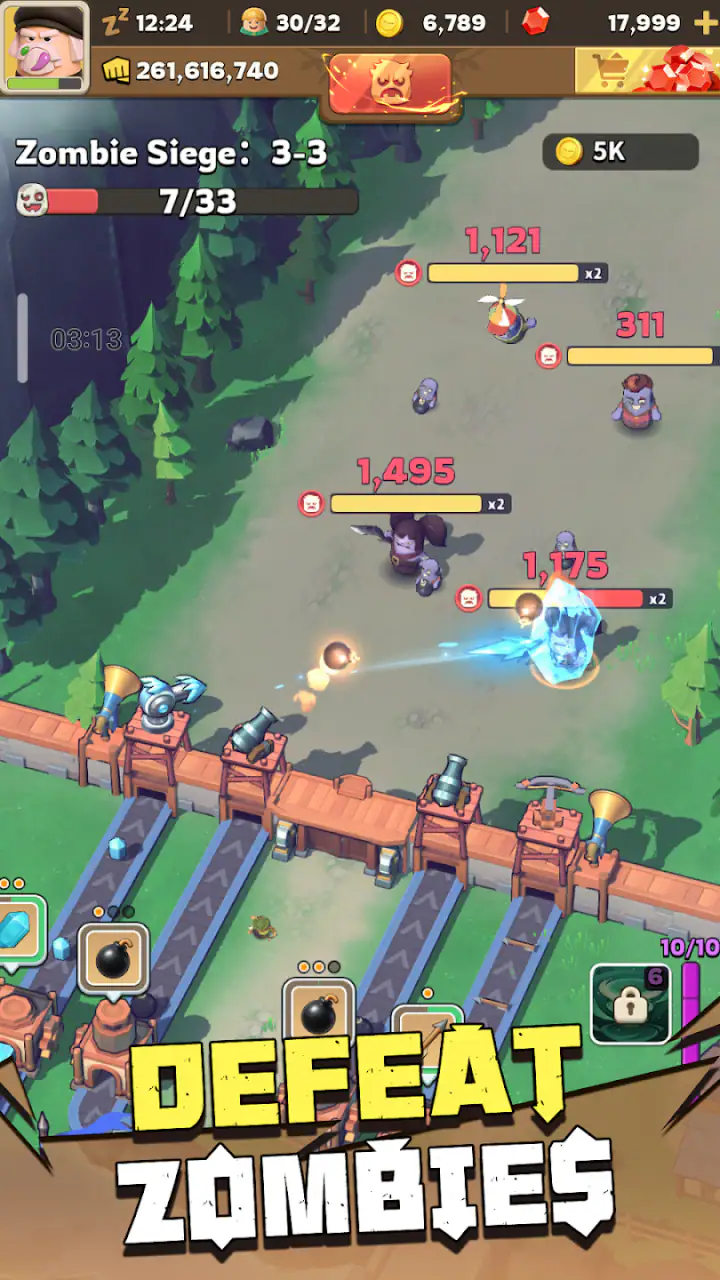
That works particularly well when I divide play into two modes. During an active threat, I concentrate on survival and avoid unnecessary rebuilding. During a quieter period, I review the layout, consider the next expansion, and decide whether the current defensive arrangement still makes sense. Keeping those modes separate reduces rushed choices.
Players who prefer completely passive progress may find this less comfortable. The game’s appeal comes from choosing when to commit and when to hold back. Even if a particular session is brief, the decisions are not meaningless taps. I felt that the best results came from returning with a plan rather than simply collecting whatever was available and spending it immediately.
Why the combination works better than either genre alone
Pure tower defense usually gives me a clear lane, a set of defensive positions, and a series of increasingly demanding attacks. Pure 4X strategy usually gives me more room to expand, but its pressure can feel slower and less immediate. Zomline Survival sits between those approaches. The zombie attacks create urgency, while the settlement decisions give that urgency consequences beyond the current encounter.
That comparison also explains its main limitation. Players who want the precise puzzle quality of a focused tower-defense title may find the broader strategy layer distracting. Players who want a deep, expansive 4X game may find the defensive action more central than the economic or territorial planning they expected. I enjoyed the middle ground, but it is a compromise rather than a perfect replacement for either style.
Settings and habits I would check early
I recommend beginning with the audio and notification controls before settling into regular play. Zombie defense can become tiring when sound effects compete with other apps or when alerts interrupt a workday. Adjusting those options to match your routine makes the game easier to revisit without making it feel intrusive.
I would also check the display behavior and any available performance-related choices on the device. The game is listed for devices running at least Android 7.1, but compatibility does not guarantee that every phone will feel equally comfortable during busy moments. If the interface feels crowded, I prefer reducing distractions rather than trying to make decisions faster than I can read them.
Another useful setting habit is to decide when notifications are genuinely helpful. If I am actively checking the game often, frequent reminders add little. If I am playing in planned visits, a restrained notification setup can make returning easier. The best configuration depends on whether I want the game to fit around my day or repeatedly pull my attention back to it.
I would not change every option at once. I make one adjustment, play through a normal session, and see whether it improves awareness or simply adds noise. That approach matters in a strategy game because a comfortable interface supports better judgment, while a cluttered one encourages hurried reactions.
Settings are part of the strategy experience
For me, settings are not only cosmetic. Clear audio can help distinguish the feeling of an active defense from a quieter planning period, while a less distracting presentation makes it easier to inspect the base before committing resources. I found that the game became more manageable when I treated the interface as part of my preparation rather than something to ignore.
This is especially important for new players who assume that difficulty comes only from stronger zombies. Some frustration actually comes from playing while tired, distracted, or unable to comfortably follow what is happening. A small amount of setup can protect the quality of the decisions that make this game worthwhile.
Faster patterns that improved my runs
The first speed improvement was learning not to rebuild defensively after every problem. When a position works, I leave it alone until there is a clear reason to change it. Constantly moving toward the latest threat can create a fragile layout that has no coherent role. I prefer a stable core with targeted adjustments around it.
The second was grouping decisions by purpose. Instead of making one defensive choice, one expansion choice, and one upgrade choice in random order, I decide which of those jobs matters most in the current phase. If survival is uncertain, I protect the base. If the defense is stable, I improve future options. This reduces the mental cost of switching between unrelated priorities.
A third habit is to keep a small reserve rather than spending every resource as soon as it becomes available. The reserve is not wasted if it lets me respond to an unexpected attack or correct a poor placement. In my experience, a slightly slower-looking build can outperform a more aggressive one because it avoids being trapped by the next problem.
These habits are not hidden tricks or shortcuts in the technical sense. They are repeatable patterns that make the existing systems easier to manage. The game rewards players who notice when a choice is reversible and when it is likely to shape the rest of a run.
Reading failure without wasting the next attempt
When a defense failed, I tried to identify the first decision that made recovery difficult rather than blaming the final wave. Sometimes the visible collapse was only the result of an earlier expansion that stretched protection too thin. Other times, I had spent too much on immediate strength and left no room to adapt.
This post-session review is one of the more rewarding parts of the game. A defeat can teach me whether my layout was weak, my timing was poor, or my priorities were simply out of order. That makes the next attempt feel purposeful. I am not repeating the same plan and hoping for a different result; I am changing one assumption and watching what happens.
Players who dislike trial and error should know that this learning loop is central to the experience. The game can be enjoyable when I accept that some runs expose a bad habit. It is less enjoyable if I expect every attempt to progress smoothly without reconsidering my approach.
Where experienced play reaches its limits
The strategy has limits because a good routine cannot remove every pressure point. A stable defensive pattern may still need adjustment when the situation changes, and careful planning cannot guarantee that every investment will remain ideal. I appreciate that tension, but it also means the game is not a perfect background activity. It asks me to stay engaged enough to notice when an old habit has stopped working.
The free entry is welcome, though the game includes in-app purchases ranging from $0.99 to $99.99 per item. That range is important for anyone who wants a strictly controlled spending experience. I can approach the game without paying, but I would still recommend deciding in advance whether purchases fit my personal limits. Strategy games become less satisfying when spending decisions replace planning decisions.
For a parent choosing a game, the Everyone 10+ rating gives a useful starting point, but I would still consider the child’s comfort with zombie themes and the presence of in-app purchases. The age label does not remove the need for family judgment. For an adult player, the rating simply signals that the presentation is aimed at a broad audience rather than a highly graphic horror niche.
The current version is 1.4.17, and the game was released on Jun 1, 2026. Those details matter when comparing impressions over time, since strategy games can change their balance and feel as updates arrive. I would judge it by the version available on the device rather than assuming that an older video or comment describes the exact experience I will have today.
Who should choose it, and who should skip it
I think it is a strong fit for someone who enjoys alternating between immediate defense and longer-term development. It is also a good choice for players who like improving through repeatable routines: checking the base, identifying the next risk, preserving flexibility, and reviewing what caused a failure.
I would be more cautious recommending it to someone who wants a calm city builder with minimal danger, or a pure tower-defense game where every decision happens inside a clearly defined level. The mixed structure may feel unfocused if you prefer one genre to stay neatly separate from the other. I would also skip it if I know I am likely to make impulsive purchases in free-to-play strategy games.
Compared with a traditional tower-defense alternative, this game gives me more reason to care about what happens between attacks. Compared with a larger 4X alternative, it is easier to approach in short visits and keeps zombie defense close to the center of attention. The trade-off is that neither side receives the full depth of a specialist game. That is not a flaw for everyone, but it is the key choice a potential player should understand.
My final verdict on building a lasting routine
After playing it with a deliberate workflow, I found Zomline Survival more satisfying than its brief premise suggests. The strongest part is not simply placing defenses against zombies. It is learning how to connect one successful defense to the next stage of growth without exhausting the options that make recovery possible.
My advice is to begin slowly, inspect the layout before spending, keep a reserve, and change only one major habit after a failed run. Check the settings so notifications and presentation suit your routine, then use quiet periods for planning instead of treating them as empty downtime. Those choices make the game feel less frantic and reveal the strategy underneath the theme.
My recommendation is for patient strategy players who enjoy pressure with consequences. It is free to try, approachable enough for short sessions, and broad enough to support a more thoughtful routine. Just keep the purchase range in mind, accept that the hybrid design will not satisfy every specialist, and decide whether you enjoy learning through repeated defenses. For me, that learning process is exactly what makes this survival game worth returning to.
FAQs for Zomline Survival
What is Zomline Survival?
Zomline Survival is a zombie-themed survival game focused on building, exploration, resource management, and combat. Players must develop a safe base, collect supplies, improve equipment, and defend themselves against infected enemies and other dangers. The game combines strategic decisions with action-oriented gameplay, so success depends on both preparing carefully and reacting quickly during dangerous encounters.
Can Zomline Survival be played offline?
Offline availability may depend on the specific version, device, and game mode. Some parts of a survival game can often be accessed without a constant connection, but features such as account synchronization, advertisements, events, updates, or online interactions may require internet access. Before downloading, players should check the current store description and test connection requirements on their Android or iOS device.
Is Zomline Survival free to download and play?
Zomline Survival may be available as a free download, but free access does not necessarily mean that every item or feature is included at no cost. Games in this genre commonly use optional in-app purchases for resources, upgrades, cosmetics, or faster progress, and advertisements may also appear. Review the store listing and purchase settings carefully, especially if children use the device.
What do you do in Zomline Survival?
The main gameplay loop involves exploring dangerous areas, gathering materials, crafting or upgrading useful equipment, strengthening your shelter, and fighting zombie threats. Players must decide when to search for better resources and when to return to safety, because poor preparation can lead to lost supplies or defeat. Progress generally rewards patience, planning, and efficient use of limited resources.
What devices are compatible with Zomline Survival?
Compatibility depends on the operating system, hardware requirements, and the version currently distributed through the official store. A device with sufficient free storage, updated system software, and stable performance is recommended because survival games can use considerable memory and battery power. Check the Google Play or App Store listing for supported versions, permissions, download size, and any device-specific limitations before installing.
Pros
- Fast-paced zombie combat keeps short sessions engaging.
- Scavenging and crafting add meaningful survival decisions.
- Progression systems provide clear goals between missions.
- Varied enemies make encounters less predictable.
- Offline play is useful when an internet connection is unavailable.
Cons
- Energy or resource limits may interrupt longer play sessions.
- Repetitive missions can become noticeable after extended gameplay.
- Some upgrades may require significant grinding to unlock.
- Touch controls can feel imprecise during hectic fights.
- Device performance may suffer during crowded combat scenes.


